Furniture buying is entering a more practical, responsible, and emotionally demanding era. Global buyers now expect beauty, durability, transparent sourcing, and flexible use.
CSIL’s World Furniture Outlook 2025 shows continued international furniture trade and changing regional demand. Its analysis highlights the importance of market positioning, consumer preferences, and production competitiveness. Meanwhile, Deloitte’s sustainability research confirms that buyers increasingly examine materials, supply chains, and environmental claims. These reports suggest a clear direction, but forecasts are never perfect.
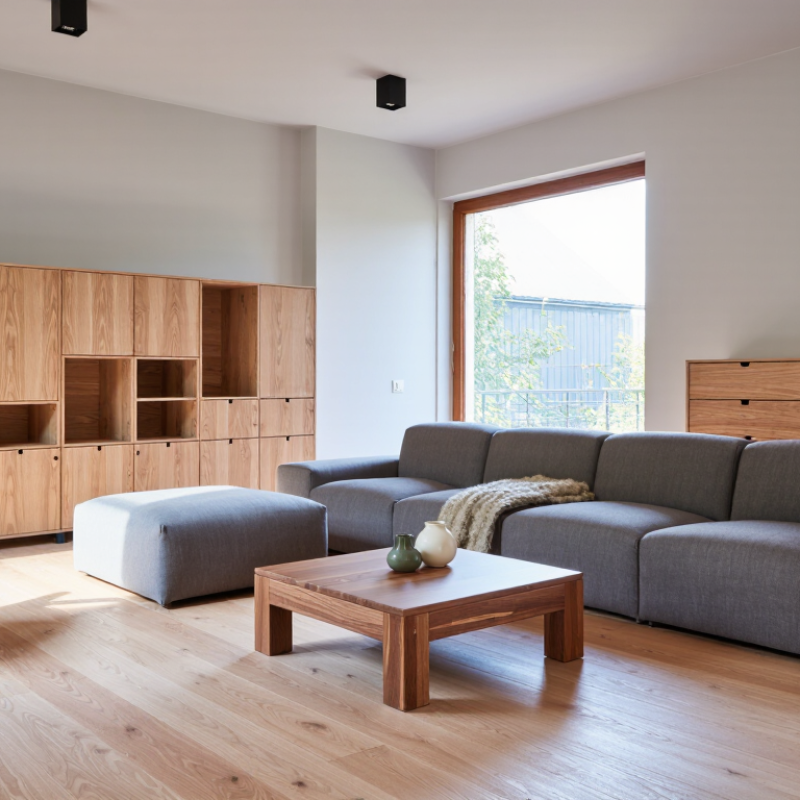
Future Trends In Furniture Design will therefore focus on furniture that performs beyond appearance. Expect modular sofas, compact storage, recycled materials, natural finishes, and repairable construction. Picture a walnut table with visible grain, replaceable legs, and a low-VOC finish. Imagine a hotel chair that becomes a lounge seat inside a small apartment. These details matter to architects, retailers, and everyday consumers.
Interior designer Ilse Crawford offers a useful design test: “A room should feel collected, not decorated.” Her statement supports a broader shift toward comfort, authenticity, and personal meaning. Buyers may prefer fewer pieces, but better ones. That assumption needs reflection. Price pressure still encourages disposable products, especially in fast-growing markets. Some recycled materials also require careful verification, rather than attractive marketing language.
The strongest 2026 collections will balance cultural identity with international usability. They will respect local living habits, shipping realities, safety requirements, and long-term maintenance. Good design should survive trends. It should also survive daily life.
The global furniture market enters 2026 with measured optimism. Outlooks from CSIL and Statista point toward continued expansion, although estimates differ by market definition, currency, and product category. CSIL’s analysis emphasizes household demand, replacement cycles, housing activity, and regional production capacity. Statista adds a broader digital view, including revenue patterns, consumer segments, and online sales development. Together, these sources suggest growth rather than a sudden boom.
For global buyers, this forecast changes how furniture should be selected and sourced. Demand is moving toward adaptable pieces, including compact dining tables, modular storage, and sofas with washable covers. In a 60-square-meter apartment, a 140-centimeter extendable table can support daily meals and weekend gatherings. Buyers also need clearer data on materials, packaging volume, lead times, and repair options. Growth can hide uneven performance. A strong online market may not reflect weaker construction activity elsewhere.
Forecasts are useful, not infallible. Exchange-rate shifts, freight costs, housing slowdowns, and import rules can quickly alter 2026 results. Buyers should compare CSIL and Statista figures with local orders, showroom feedback, and quarterly logistics data. This approach is stronger than relying on one headline number. The uncomfortable question remains: is market growth creating durable value, or simply more units? Product lifespan, material transparency, and after-sales capability still require careful testing.
Global Furniture Market: 2026 Growth Forecasts from CSIL and Statista
| Trend / Market Dimension | 2026 Buyer Direction | Relevant Data or Market Evidence | Product Opportunities | Priority for Global Buyers |
|---|---|---|---|---|
| Modular and Flexible Furniture | High demand for furniture that can be reconfigured, extended, or moved between rooms. | Smaller urban homes and multifunctional rooms continue to support demand for space-efficient products. CSIL identifies flexibility and functional design as important furniture-market directions. | Sectional seating, nesting tables, extendable dining tables, modular storage, and demountable office systems. | Very High |
| Sustainable Materials and Circular Design | Preference for durable products, certified wood, recycled inputs, repairability, and transparent material information. | The European Union’s Ecodesign for Sustainable Products Regulation entered into force in 2024 and promotes durability, repairability, recyclability, and product information. | FSC-certified wood, recycled metals, recycled textiles, replaceable components, flat-pack construction, and take-back-ready designs. | Very High |
| Warm Minimalism | Clean silhouettes combined with natural textures, softer edges, and warmer neutral colors. | The direction reflects continued consumer interest in calm, durable interiors rather than highly decorative short-life products. | Rounded sofas, light oak finishes, beige and clay tones, textured upholstery, and simple sculptural occasional tables. | High |
| Multifunctional Home Office Furniture | Home-office products are increasingly expected to integrate with living and sleeping areas. | Hybrid work has made adaptable work areas a continuing residential requirement, particularly in urban apartments. | Fold-away desks, compact ergonomic chairs, cable-managed tables, acoustic panels, and storage benches. | High |
| Outdoor and Indoor-Outdoor Living | Consumers seek weather-resistant furniture with indoor comfort and residential styling. | Outdoor living remains a major furniture category across residential, hospitality, and contract applications. | Aluminium frames, UV-resistant fabrics, modular outdoor seating, compact balconies sets, and all-weather storage. | High |
| Ergonomics and Wellness | Comfort, posture support, acoustic control, and user well-being are becoming core purchase criteria. | Demand is supported by longer periods spent working, studying, and relaxing at home. | Adjustable-height desks, supportive seating, recliners, acoustic furniture, and low-impact lounge products. | High |
| Digital Furniture Retail | Online discovery, visualization, customization, and delivery transparency remain essential for international buyers. | Statista’s global furniture-market coverage identifies e-commerce as an established distribution channel with continued growth potential. | 3D product views, augmented-reality placement, digital fabric samples, online configuration, and clear assembly information. | Very High |
| Flat-Pack and Logistics Efficiency | Buyers increasingly value compact packaging, easy assembly, lower shipping risk, and reduced storage costs. | International freight, warehousing, and last-mile delivery costs make packaging efficiency a significant sourcing consideration. | Knock-down furniture, optimized carton design, recyclable packaging, standardized components, and replacement-part systems. | Very High |
| Premium Value and Long-Life Products | Global buyers are balancing initial price with lifespan, maintenance cost, warranty, and resale value. | CSIL and Statista market outlooks indicate a competitive market in which product differentiation, quality, and value remain important growth factors. | Contract-grade construction, replaceable covers, repair kits, extended warranties, and clearly documented specifications. | High |
| Regional Growth Focus | Prioritize products that can be adapted to different housing sizes, climate conditions, regulations, and price levels. | Global demand is diversified across Asia-Pacific, Europe, North America, Latin America, the Middle East, and Africa; growth rates and category preferences vary by region. | Scalable collections, multiple dimensions, localized materials, multilingual instructions, and region-specific compliance documentation. | Very High |
The market is expected to expand steadily, not explode. Results may vary by region, currency, housing activity, and product category. Forecasts are useful, but imperfect.
Buyers may prefer adaptable pieces, such as compact dining tables and modular storage. Washable sofa covers can support busy households. A 140-centimeter extendable table suits a small apartment and weekend guests.
Request material details, packaging volume, lead times, repair options, and inspection records. These details reveal costs beyond the catalog price. A polished product page is not enough.
Compare forecast figures with local orders, showroom feedback, and quarterly logistics data. Freight costs and exchange rates can change quickly. One headline number may mislead.
A height-adjustable desk can track sitting time and suggest standing breaks. A bedside table can monitor temperature and charging safety. Practical value matters more than decorative technology.
Check Wi-Fi, Bluetooth, app, and voice compatibility. Ask whether the furniture works without internet access. Connectivity can fail.
Products should offer clear consent controls for cameras and microphones. Data collection should remain limited and understandable. Local data processing may reduce privacy concerns.
Check certification numbers, product scope, validity dates, and supply-chain coverage. Request current laboratory reports for strength, durability, and stability. A logo alone proves little.
A showroom sample may pass testing while later materials or hardware change. Inspect random units before loading. Keep photographs, batch codes, and signed records.
Track defect rates, test pass rates, corrective-action closure, and document renewal dates. Digital files may contain outdated versions. I would recheck them.
Future Trends In Furniture Design are being shaped by steady global market growth, changing lifestyles, and increasing expectations for responsible production. By 2026, buyers will place greater value on sustainable materials, recyclable components, and transparent product information as environmental product rules and circular-economy goals become more important. Furniture designed for repair, reuse, and longer service life will offer stronger opportunities for international suppliers.
Urbanization and limited living space will continue to increase demand for multifunctional products, including modular, foldable, and space-saving furniture. At the same time, smart furniture will expand through practical IoT features such as connected lighting, charging systems, and adaptable functions. For global sourcing, suppliers should also prepare for stronger compliance expectations by aligning with recognized forestry, safety, durability, and social responsibility standards. Clear documentation, measurable quality controls, and reliable supply-chain data will help buyers evaluate products and build long-term partnerships.

 Hydra Furniture