Choosing furniture surface protection in 2026 requires more than comparing gloss levels or coating prices. Furniture now faces frequent cleaning, ultraviolet exposure, humidity changes, abrasion, and stricter sustainability expectations. The Business Research Company’s Furniture Global Market Report 2025 describes continued growth in furniture demand, increasing pressure on manufacturers to improve durability and product value. More furniture also means more surfaces exposed to failure.
Practical testing matters. In real installations, a dining table may face hot cups, spilled coffee, keys, and repeated wiping every day. A hotel cabinet faces stronger cleaning chemicals and heavier contact. A glossy sample can mislead. It may look attractive under showroom lights but reveal fingerprints quickly. Therefore, Furniture Surface Protection Methods should be selected by substrate, use intensity, repairability, and expected service life. Relevant options include water-based coatings, oil finishes, laminates, films, glass panels, and protective edge treatments.
Sustainability also changes the decision. Grand View Research’s furniture industry analysis identifies growing interest in durable and environmentally responsible products. The Ellen MacArthur Foundation continues to emphasize designing products for longer use, maintenance, and recovery. However, “green” claims need careful verification. A low-VOC finish is not automatically the most durable choice. A recyclable panel may still perform poorly in a wet environment. Compare technical datasheets, abrasion results, chemical-resistance tests, maintenance instructions, and supplier certifications. ISO-based testing can help, but laboratory results never perfectly reproduce household behavior. That gap deserves attention. A reliable 2026 choice balances protection, appearance, indoor air considerations, repair needs, and total lifecycle cost.
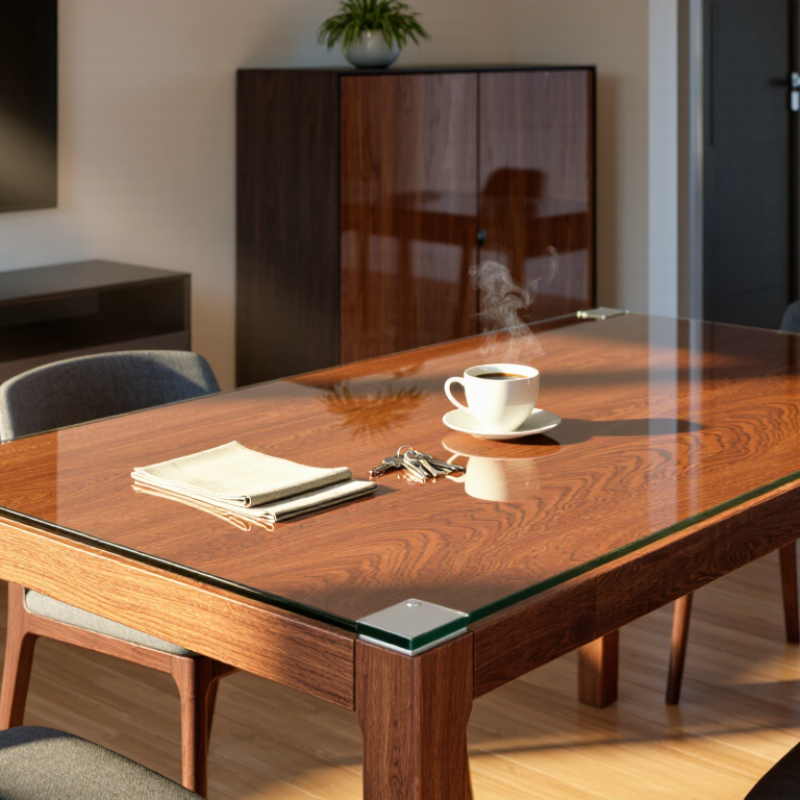
Furniture surface protection is the layer, treatment, or cover that shields a finished surface from daily damage. It may be a clear coating, protective film, wax, glass panel, or fitted pad. The right choice depends on the furniture material and its environment. A dining table faces spilled water, hot dishes, and repeated wiping. A wooden cabinet may need protection from sunlight and changing humidity. Protection is not decoration alone. It manages wear.
In practical furniture inspections, I look for three risks: moisture, abrasion, and heat. Moisture can swell unfinished wood or stain porous stone. Abrasion appears around drawer pulls, table edges, and frequently used seats. Heat may soften some finishes or leave pale rings. A suitable protector should match the surface, not merely cover it. Breathability matters for natural wood. Easy cleaning matters in busy homes. A textured pad can reduce movement, but it may trap dust underneath.
No solution is flawless. I once saw a clear cover protect a tabletop while creating cloudy marks beneath it. The problem was poor ventilation, not the furniture itself. This is easy to overlook. Before choosing protection in 2026, check the finish, room humidity, cleaning routine, and expected contact. Test an unseen area first. Follow the care instructions supplied with the furniture. Replace damaged pads or films promptly, because trapped grit can act like sandpaper. A professional assessment is worthwhile for antique, delicate, or high-value pieces. Surface protection should preserve the material’s character, not hide it.
Furniture surfaces fail for different reasons. Solid wood reacts to moisture, heat, and uneven humidity. Veneer can blister when liquid reaches its edges. Painted MDF often shows chips around handles and corners. Leather absorbs oils, while fabric traps dust and spills. In practical inspections, the damage usually starts at contact points. Small scratches become visible first.
Usage changes the risk. A dining table needs resistance to hot dishes, acidity, and repeated wiping. A home-office desk faces keyboard friction, coffee rings, and sunlight. Children’s furniture needs impact protection and easy cleaning. The 2024 CSIL World Furniture Outlook estimates global furniture consumption at more than US$1.5 trillion. That scale increases demand for longer service life, not just attractive finishes. The U.S. Environmental Protection Agency also identifies indoor dust as a carrier for residues and particles, making cleanable surfaces useful in high-use rooms.
Protection should match the material, not follow a universal formula. Use breathable finishes on moisture-sensitive wood, flexible coatings on leather, and abrasion-tested films on frequently touched panels. Check test evidence, including ISO 12944-style abrasion references where relevant, and ask how the finish performs after repeated cleaning. Some “durable” coatings still cloud under harsh chemicals. I have seen this assumption fail. Protection is never permanent. Inspect edges, joints, and exposed corners every few months, then adjust the maintenance method before minor wear becomes structural damage.
Surface protection should match the material, not only the room. Solid wood and veneer need finishes that tolerate moisture movement. The USDA Forest Products Laboratory’s Wood Handbook reports that wood can change dimension substantially as moisture content shifts, especially across the grain. A flexible clear coat can reduce staining, but it cannot stop movement completely.
Test first. Apply protection to a hidden edge and inspect it after 24 hours.
For painted MDF, prioritize resistance to water, rubbing, and household chemicals. ASTM D4060 measures abrasion through controlled wheel testing, while ASTM D3363 evaluates coating hardness. Harder is not always better. A brittle film may crack around drawer pulls. In daily use, I prefer a balanced coating with cleanable gloss and slight flexibility. Matte surfaces hide fingerprints, yet their texture can trap dust near handles.
Laminate usually needs less sealing, but its joints and exposed edges remain vulnerable. Use a moisture-resistant edge treatment around sinks, coffee stations, and plant pots. Glass benefits from anti-smudge treatments, while metal requires protection against fingerprints and corrosion. The European Chemicals Agency’s guidance on treated articles stresses that performance depends on correct application and maintenance. That point is easy to overlook. Surface tests also use controlled conditions, unlike a hot mug, sandy sleeve, or child’s wet cup at home. Real rooms are less polite.
How to Choose Furniture Surface Protection in 2026?
Evaluating Safety, Durability, Maintenance, and Environmental Impact
A safe furniture finish should resist peeling, cracking, and harmful surface transfer. Check technical data for emissions, curing requirements, and contact safety. A low-odor product is not automatically safer. Ask for independent test results. Look for evidence covering abrasion, staining, moisture, and heat resistance. Small details matter, especially around children’s furniture and dining surfaces.
Durability affects both cost and daily comfort. In practical use, a tabletop may face coffee rings, keys, sunlight, and repeated wiping. Choose protection tested against realistic wear, not only laboratory claims. I have found that very hard coatings can still fail at corners. Flexibility matters there. Maintenance should remain simple. A soft cloth and mild cleaner are preferable to aggressive chemicals. Always test cleaners on a hidden area first.
Environmental impact requires a wider view than recycled content. Consider material sourcing, manufacturing emissions, packaging, service life, and end-of-life disposal. A longer-lasting surface can reduce replacement waste, but only if it remains repairable. Water-based options may reduce certain emissions, yet their full footprint still needs verification. Certification can help, though labels are not perfect. I would also question glossy finishes that demand frequent polishing. That habit consumes time and cleaning products. The best choice balances safety, resilience, easy care, and realistic environmental performance. Sometimes, the greener option is simply the one that survives another decade.
Comparative screening of common furniture surface-protection options across safety, durability, maintenance, and environmental impact.
Scores use a 1–5 scale, where 5 indicates the more favorable result. Safety considers odor and VOC-related concerns during application; durability reflects resistance to abrasion, moisture, and household use; maintenance reflects ease of cleaning and repair; environmental impact considers water content, VOC profile, material efficiency, and expected service life. Actual performance depends on formulation, application quality, substrate, and use conditions.
Reference framework: U.S. EPA Safer Choice criteria, EU VOC requirements for decorative paints and varnishes, ISO 2813 gloss measurement, ISO 2409 adhesion testing, and EN 71-3 migration testing for relevant treated surfaces.
Choosing furniture surface protection starts with the material, not the product label. Solid wood, veneer, painted panels, glass, and laminate react differently. I inspect the surface under daylight for scratches, dull patches, raised grain, or old residue. A clean diagnosis prevents expensive rework. Daily use matters too. A dining table needs resistance to moisture, heat, and repeated wiping. A bedroom cabinet may need only light abrasion protection.
Select a coating, film, or treatment that matches the surface and its exposure. Check technical instructions for compatibility, sheen, drying time, and cleaning limits. Apply a small test patch behind a leg or inside a drawer. Wait through the full curing period. A finish can look dry while remaining soft underneath. Use a lint-free cloth, thin layers, and controlled ventilation. Avoid heavy application. It often causes cloudy edges or slow curing. On textured furniture, work along the grain and remove pooled material from corners.
I have seen careful owners damage a finish by wiping it too soon. Patience matters. Use coasters, felt pads, and clean water during the first days. Record the application date and treatment type for future maintenance. Recheck high-contact areas after several weeks, not immediately. Protection is not permanent. It can also change the original color slightly, especially on pale wood. That possibility deserves an honest test. When online advice conflicts with surface data, consult a qualified finishing professional.
It is a coating, film, wax, glass panel, or fitted pad. It helps reduce moisture, abrasion, heat, and daily wear.
Solid wood, veneer, painted panels, glass, and laminate react differently. Match the protection to the material, finish, and room conditions.
Look for scratches, dull patches, raised grain, old residue, and cloudy marks. Inspect the surface under daylight.
Choose protection against spills, hot dishes, coffee rings, and repeated wiping. Use coasters and clean water during the early curing period.
A finish may change pale wood slightly. Testing behind a leg or inside a drawer reveals color and compatibility problems.
Yes, sometimes. Poor ventilation may create cloudy marks beneath the cover.A trapped grit can act like sandpaper.
Clean the surface, use a lint-free cloth, and apply thin layers. Control ventilation and remove pooled material from corners.
Wait through the full curing period, even when the surface feels dry. Early wiping can soften or damage the finish.
Review emissions, curing requirements, contact safety, and independent test results. Low odor alone does not prove safety.
Consider sourcing, manufacturing, packaging, service life, repairability, and disposal. A durable option may prevent another replacement, but labels are not perfect.
Choosing the right furniture surface protection in 2026 begins with understanding how protection preserves appearance, usability, and material strength. Furniture may face scratches, stains, moisture, heat, sunlight, dust, or frequent contact, and the level of risk depends on both the surface material and its daily use. Wood, glass, metal, leather, laminate, and fabric each require different care strategies. Furniture Surface Protection Methods may include protective coatings, sealants, covers, pads, films, and routine cleaning practices, but the best option should match the surface’s structure and finish.
A practical selection process should balance safety, durability, maintenance requirements, appearance, and environmental impact. Choose solutions that are suitable for indoor use, easy to maintain, and unlikely to damage the original surface. Proper preparation and application are equally important: clean the furniture, follow usage instructions, test protection on a hidden area, and allow sufficient drying or curing time. With regular inspection and timely maintenance, the right protection can reduce repair needs and help furniture remain attractive and functional for many years.

Hydra Furniture