How to Choose Furniture for Entryway Organization?

Time:2026-10-11 Author:Isabella
0%

Choosing Furniture For Entryway Organization is less about filling an empty hallway. It is about designing a reliable landing place for daily life. Shoes, umbrellas, keys, bags, and mail often arrive together. Without a clear system, even an attractive entryway becomes crowded within hours.

Interior designer Nate Berkus has said, “Your home should rise up to greet you.” That idea fits entryway planning well. The right furniture should welcome people while quietly managing clutter. A slim console can hold keys and mail without blocking movement. A storage bench can provide seating and hide frequently used shoes. Wall hooks can keep coats visible, but not scattered across chairs. Measure the walkway before buying anything. A beautiful cabinet is useless if the door strikes a wall.

Material choice also matters. Solid wood may offer durability, while metal and engineered boards can suit smaller budgets. Families with children may need rounded corners and lower storage. Pet owners might prefer washable surfaces near the entrance. These practical details reflect real experience, not showroom styling.

Still, no arrangement works perfectly for every household. A bench may become a dumping ground. Open shelves may reveal more mess than expected. That is not failure; it is useful feedback. Observe what people actually leave near the door for one week. Then adjust the furniture, labels, or storage height. Good organization should support habits, not demand unrealistic behavior. This guide explores proportions, materials, storage types, and placement choices, helping you create an entryway that feels orderly, accessible, and genuinely lived in.
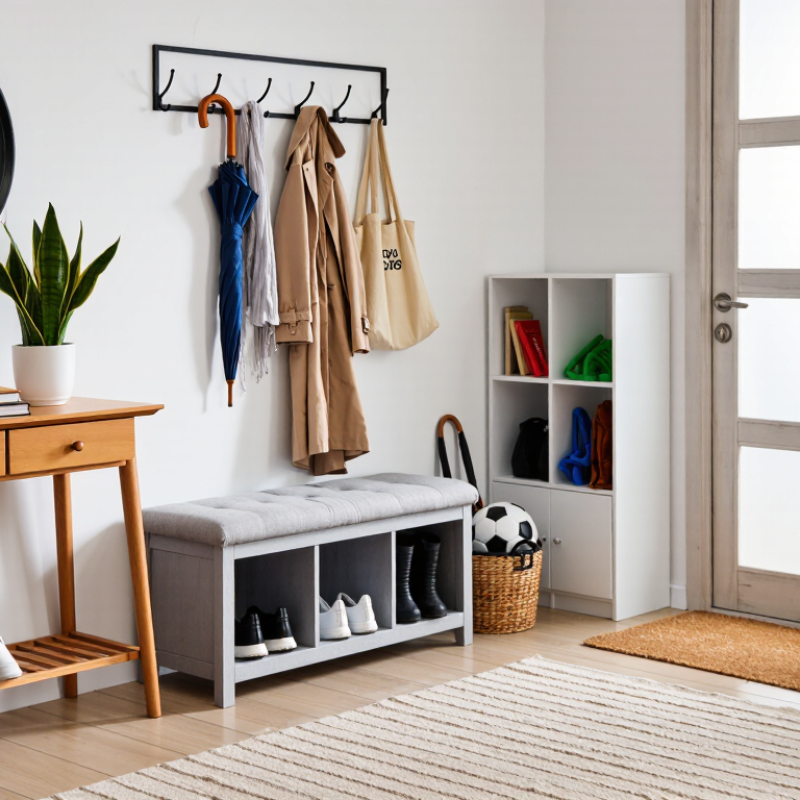
How to Choose Furniture for Entryway Organization?

Define Your Entryway Storage Needs and Available Space

A well-organized entryway begins with an honest assessment of your storage needs. Observe what usually gathers near the door: shoes, coats, bags, umbrellas, or small daily items. Count these items during a busy week, not on a tidy morning. This gives a more realistic picture. Measure the wall width, floor depth, ceiling height, and door swing. Leave enough clearance for comfortable movement. A narrow hallway may need vertical storage, while a wider entrance can support a bench with enclosed compartments.

Tips

Use painter’s tape to mark the furniture footprint on the floor. Walk around it with a full bag. Check whether drawers, doors, and nearby switches remain accessible. Measure bulky items before choosing shelves. A storage unit that looks spacious online may feel cramped at home.

Choose furniture according to the space and your habits. Open hooks offer quick access, but they can make a small entrance look visually crowded. Closed cabinets hide clutter, though they require more opening space. A bench can support seating and shoe storage, but its height should feel comfortable for daily use. Keep frequently used items between waist and shoulder level. Store seasonal belongings higher or farther back. I once underestimated umbrella storage; the dripping water damaged the floor beneath an open basket. A washable tray would have been wiser. Reflect on cleaning, too. Furniture with raised legs makes sweeping easier, but it may collect dust underneath. Practical entryway design is less about filling space and more about matching furniture to real routines.

How to Choose Furniture for Entryway Organization?

Typical furniture depth and minimum circulation space can help match storage choices to the available entryway width.

Narrow consoles and shoe cabinets are generally more suitable for compact entries, while benches and wardrobes require greater depth. Keep approximately 90 cm of unobstructed circulation space wherever possible; measure the entryway width first, then select furniture that leaves a comfortable passage.

Planning guide: dimensions are typical residential furniture and circulation measurements; verify the actual product dimensions and local accessibility requirements before installation.

Select Furniture Based on Entryway Size and Traffic Flow

How to Choose Furniture for Entryway Organization?

Measure the usable floor area, not only the wall length. The 2024 International Residential Code identifies 36 inches as a practical minimum corridor width. Keep that distance clear after placing a bench, cabinet, or shoe rack. The U.S. Access Board also specifies a 36-inch minimum accessible route and a 32-inch clear doorway opening. These figures make furniture depth important. Choose pieces around 12 to 16 inches deep when space is limited. Check the door swing, too.

Traffic flow should guide the furniture layout. Mark the route from the entrance to the living area with painter’s tape. Then observe it during busy moments. A narrow console may look elegant, but it can obstruct two people carrying bags. Wall-mounted hooks reduce floor congestion. A slim bench can support shoes without creating a stopping point. Leave open space beside the door for umbrellas, parcels, or mobility aids.

Small details matter. Use closed storage for daily clutter and one open basket for quick access. In my experience, families often install too much storage and create a cramped landing zone. I have made that mistake myself. Recheck the layout after a week. If shoes collect outside the cabinet, the furniture is not matching real traffic patterns. Furniture should support movement, not merely fill empty walls.

Match Storage Types to Shoes, Coats, Accessories, and Daily Items

An entryway works best when every item has a clear landing place. Shoes need low, open storage with enough airflow to reduce damp smells. A narrow bench can hold daily footwear while providing a safer place to sit. Avoid deep shelves if they swallow small shoes and make cleaning difficult. Measure the walkway carefully. Crowded furniture quickly becomes a trip hazard.

Coats belong on sturdy hooks or a shallow closed cabinet. Hooks keep frequently worn jackets visible and easy to grab. A cabinet creates a calmer appearance, but it needs ventilation and enough height for longer coats. Use small drawers or divided trays for keys, scarves, gloves, and sunglasses. I once stored everything in one basket. It looked tidy for two days, then became a frustrating pile. Separate storage usually supports better habits.

Tips: Keep daily items between waist and shoulder height. Place children’s hooks lower, so independence feels practical. Choose washable surfaces near wet shoes. Add one empty compartment for unexpected items. It will fill eventually. Check door swings, outlet locations, and cleaning access before buying furniture. I have learned that attractive storage can still fail when it ignores real household routines.

Evaluate Materials, Safety, Durability, and Ease of Maintenance

Entryway furniture must survive wet shoes, grit, keys, and rushed mornings. Material choice matters. Powder-coated steel resists scratches, while sealed hardwood handles repeated wiping better than unfinished wood. Engineered panels can perform well, but check low-emission documentation. The U.S. Environmental Protection Agency’s formaldehyde standards for composite wood require strict emission limits. That evidence is more useful than vague “eco-friendly” labels.

Safety deserves equal attention. The U.S. Consumer Product Safety Commission estimated about 22,000 furniture tip-over injuries received emergency treatment each year from 2018 to 2020. Choose a bench with a wide base, rounded corners, and included wall anchors. Test the doors and drawers yourself. A beautiful cabinet that rocks slightly is not acceptable. I have found that small entryways encourage overloading, even when the product looks strong.

Tips: Measure the doorway first. Leave a clear walking path. Select wipe-clean finishes for rainy climates. Check hinges, fasteners, and weight ratings before buying. Avoid deep open shelves where bags can snag. Use a damp cloth, not harsh solvent, unless the care guide permits it. Maintenance advice is often ignored. That is the weak point. Recheck anchors after moving furniture, and inspect swollen edges or loose joints every few months. ANSI/BIFMA performance standards can provide useful durability benchmarks, but household use is messier than laboratory testing.

Arrange Furniture for Efficient Organization and Visual Balance

How to Choose Furniture for Entryway Organization?

An entryway works best when furniture guides movement instead of blocking it. Measure the walking path before choosing storage pieces. Keep about 36 inches of clear passage for comfortable movement. A slim console can hold keys without crowding the doorway. Place it against the longest wall, not beside the opening door. Add a shallow drawer for small items and a lower shelf for daily footwear. Open space matters.

Visual balance depends on height, weight, and repetition. Pair a low bench with a taller mirror or wall-mounted hooks. This contrast draws the eye upward and keeps the floor visually calm.

Use baskets with consistent shapes to control loose scarves, gloves, and pet leads. Avoid filling every surface. Empty space makes organized furniture look intentional, rather than merely packed.

I once placed a wide bench near a narrow entrance. It looked useful, but people bumped into it regularly. That mistake changed how I plan entryways. Furniture should match real household habits, not an idealized room.

If children remove shoes quickly, choose an accessible cubby instead of high cabinets. If muddy footwear is common, use a washable mat and ventilated storage. Test the arrangement for several days. A beautiful layout may still fail during busy mornings. Reconsider pieces that collect clutter, even when they appear practical.

FAQS

How should I measure my entryway before choosing storage furniture?

Measure wall width, floor depth, ceiling height, and door swing. Mark the furniture footprint with painter’s tape. Walk around it carrying a full bag. Check drawers, switches, outlets, and walking clearance. Online dimensions can feel surprisingly cramped at home.

Which storage types suit shoes, coats, and small accessories?

Use low, open shelves for shoes and airflow. Choose sturdy hooks for frequently worn coats. A shallow cabinet can hide clutter and longer garments. Use divided trays for keys, gloves, scarves, and sunglasses. One basket often becomes a frustrating pile.

Is a bench useful in a small entryway?

A bench offers seating and space for daily shoes. Choose a comfortable height for regular use. Avoid deep designs that narrow the walkway. Select enclosed compartments when visual clutter bothers you. Keep the floor path clear.

Where should frequently used items be placed?

Keep daily items between waist and shoulder height. Place children’s hooks lower for easier independent use. Store seasonal belongings higher or farther back. Leave one empty compartment for unexpected items. It will probably fill.

What materials work well near wet shoes and heavy use?

Sealed wood handles repeated wiping better than unfinished wood. Powder-coated metal can resist everyday scratches. Engineered panels may work well when emissions are documented. Choose washable surfaces near umbrellas and wet footwear. Durability matters more than attractive wording.

How can I improve entryway furniture safety?

Choose furniture with a wide base and rounded corners. Use included wall anchors when appropriate. Test doors, drawers, and stability before buying. Avoid units that rock, even slightly. Small spaces encourage overloading.

How do I make entryway storage easier to clean?

Raised legs can make sweeping underneath easier. However, dust may collect below the furniture. Use wipe-clean finishes in rainy areas. Place dripping umbrellas in a washable tray. I once underestimated this detail.

What maintenance should entryway furniture receive?

Wipe surfaces with a damp cloth unless care instructions say otherwise. Inspect hinges, fasteners, swollen edges, and loose joints every few months. Recheck wall anchors after moving the furniture. Avoid harsh solvents without permission from the care guide. Lab ratings cannot predict every messy morning.

Conclusion

Choosing Furniture For Entryway Organization begins with understanding your storage needs, available space, and daily routines. Consider how many shoes, coats, bags, keys, and accessories must be stored, then measure the entryway carefully. Select furniture that fits the room’s dimensions without blocking doors or creating narrow walkways. In smaller spaces, slim cabinets, wall-mounted hooks, or multifunctional benches can improve storage while preserving traffic flow. Larger entryways may accommodate a combination of seating, enclosed storage, and open shelving.

Match each storage feature to the items it will hold, keeping frequently used belongings easy to reach and less-used items neatly contained. Prioritize sturdy, easy-to-clean materials and look for stable designs with smooth edges and secure construction, especially in busy households. Finally, arrange the furniture to support natural movement and maintain visual balance. A coordinated layout can make the entryway feel welcoming, organized, and practical while reducing daily clutter.

Isabella

Isabella

Isabella is a dedicated marketing professional with a sharp focus on driving brand growth and engagement through strategic content creation. With an extensive background in digital marketing, she combines her passion for storytelling with her keen understanding of industry trends to deliver......